Canada Solar Incentives 2026: Federal Status & Rebates
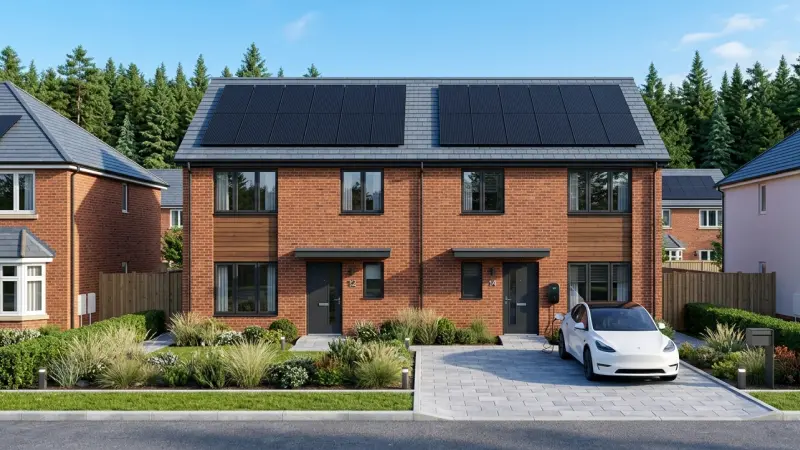
The Canadian residential solar market has transitioned into a highly decentralized regulatory framework. Property owners looking to insulate themselves from escalating utility tariffs—which now exceed 39¢/kWh during peak hours in volatile municipal zones—must recalibrate their financial strategies.
As nationwide infrastructure programs adapt, the economic viability of domestic photovoltaic (PV) and micro-generation setups relies heavily on balancing localized provincial grants against utility-specific net metering structures. Homeowners can actively run their production numbers and localized tariff baselines through our interactive Solar Calculator in Toronto Downtown.
The Federal Landscape: Greener Homes Transition
A critical point of entry for any Canadian homeowner planning an energy retrofit is understanding the structural shift at the federal level. The legacy Canada Greener Homes Grant (which historically provided up to $5,000 in direct asset rebates) has concluded its open intake cycle, with the final runway for outstanding documentation wrap-ups hitting its hard stop. Concurrently, the interest-free Canada Greener Homes Loan portal has officially fully committed its funding reserves as of early Spring, closing the window for fresh applications.
However, federal support has not vanished; it has pivoted strategically. The federal government has launched the Canada Greener Homes Affordability Program (CGHAP), which shifts the funding focus toward low-to-median-income homeowners and affordable housing providers, covering direct retrofit costs without out-of-pocket barriers. Eligible property owners can review stacking options and decentralized funding criteria in our comprehensive guide for Solar Grants in Chilliwack Central.
For commercial enterprises, agricultural operations, and multi-unit residential developers, the Clean Technology Investment Tax Credit (ITC) remains an aggressive pillar, offering a 30% refundable tax credit through the Canada Revenue Agency (CRA) to directly offset grid-tied capital expenditure.
Provincial Breakdown: Where the Active Grants Live
Because federal residential cash injections have localized, your geographic coordinates dictate your upfront system payback velocity. Currently, British Columbia and Prince Edward Island lead the nation in active, direct-to-consumer utility rebates, while other key provinces rely on advanced grid-monetization paths.
1. British Columbia: The BC Hydro Powerhouse
BC Hydro operates one of the most lucrative active dual-asset incentive playbooks in the country. To qualify for these pools, homeowners must ensure their system is deployed by a registered member of the Home Performance Contractor Network (HPCN). The program breakdown includes:
- Solar PV Generation Rebate: Offers $1,000 per kW of installed generating capacity, up to a hard ceiling of $5,000 (capped at 50% of total product and labor costs).
- Smart Storage Battery Rebate: Delivers up to an additional $5,000 for systems integrated into BC Hydro’s Peak Saver energy management loop.
- Tax Relief: The province provides a complete, structural Provincial Sales Tax (PST) exemption on all core solar hardware components, adding an instant ~7% savings out-of-the-gate.
Critical Regulatory Update: BC Hydro’s legacy 1:1 net metering tariff (Rate Schedule 1289) will officially permanently close to new applicants on July 1, 2026. Existing connected or pre-approved users do not get 20 years of protection; instead, they are grandfathered for a maximum timeline of 10 years from their original system interconnection date.
Crucially, if you have claimed BC Hydro's solar panels rebate of up to $5,000, you will be automatically transitioned to the new 10¢/kWh fixed export rate (RS2289) on July 1, 2026. Homeowners wishing to preserve legacy net metering rules must formally repay their entire received rebate to BC Hydro before the June 30, 2026 cutoff window.
2. Ontario: The HRSP Framework & Net Metering Split
Ontario solar buyers face a strict binary decision tree. Under the provincial Home Renovation Savings Program (HRSP), homeowners can access up to $5,000 back for behind-the-meter solar panel arrays, alongside a matching $5,000 allocation for residential battery installations (with a total program cross-cap set at $12,000).
However, Ontario’s regulatory framework enforces a strict anti-stacking clause: if you opt to claim the upfront HRSP solar cash rebate, that specific array is legally barred from enrolling in standard utility Net Metering.
Conversely, bypassing the HRSP grant allows you to leverage your Local Distribution Company's (LDC) 1:1 Net Metering framework, which includes a 12-month credit rollover mechanism. This allows you to feed excess summer generation back into the provincial wire network to completely wipe out high winter heating bill liabilities.
3. Alberta: The Micro-Generation Arbitrage Strategy
While Alberta lacks a broad provincial cash grant, the deregulated nature of its energy market offers unmatched monetization vectors through localized municipal paths and specialized energy cooperatives:
- Clean Energy Improvement Program (CEIP): Active across more than 23 Albertan municipalities (including Calgary, Edmonton, and Canmore), this Property Assessed Clean Energy (PACE) mechanism provides $0-down financing up to $40,000. The capital cost of the solar installation is tied directly to the property's tax roll rather than the individual, allowing seamless transferability upon home resale.
- The Alberta Solar Club™: Homeowners can exploit high micro-generation export values by shifting between tiered seasonal rates. You can select a premium high-export tariff (e.g., ~33¢/kWh) during peak solar production months when your system overproduces, and cleanly pivot back to a lower retail rate (e.g., ~12¢/kWh) during dark winter months when you rely entirely on imports from the pool.
Canadian Solar Economics & System Costs
The mathematical decision to transition to solar in Canada is governed by the relationship between the upfront engineering cost per watt and the avoided retail utility tariffs over a projected 25-to-30-year operational lifecycle.
The standard financial formula for residential net-returned savings is structured as:
Net Savings = (Annual Generation × Retail Import Rate) + (Excess Exported Energy × Active Credit Rate) - Maintenance Costs
Where:
- Annual Generation: Represents the total localized annual kilowatt-hour (kWh) electricity produced by your array.
- Retail Import Rate: Is your avoided grid-import utility tariff price.
- Excess Exported Energy: Represents the surplus energy pushed back to the local utility wire network.
- Active Credit Rate: Is your current active net metering contract or seasonal billing credit rate.
- Maintenance Costs: Represents minor ongoing systemic operational maintenance or monitoring fees.
Cost Profiles by Province
The matrix below outlines the real-world residential installation costs across major provinces, accounting for localized market pricing and active baseline incentives:
| Province | Average Capital Cost per Watt ($CAD) | Avg. Residential System Size | Estimated Net Cost (Post-Incentive / Tax Relief) | Average Payback Period Timeline |
|---|---|---|---|---|
| ProvinceOntario | Average Capital Cost per Watt ($CAD)$2.42 – $3.05 | Avg. Residential System Size7.5 kW | Estimated Net Cost (Post-Incentive / Tax Relief)$14,000 – $18,000 | Average Payback Period Timeline7 – 9 Years |
| ProvinceAlberta | Average Capital Cost per Watt ($CAD)$2.51 – $2.77 | Avg. Residential System Size8.0 kW | Estimated Net Cost (Post-Incentive / Tax Relief)$15,500 – $19,000 | Average Payback Period Timeline6 – 8 Years |
| ProvinceBritish Columbia | Average Capital Cost per Watt ($CAD)$2.60 – $3.27 | Avg. Residential System Size7.2 kW | Estimated Net Cost (Post-Incentive / Tax Relief)$16,000 – $21,000 | Average Payback Period Timeline6 – 7 Years |
| ProvincePrince Edward Island | Average Capital Cost per Watt ($CAD)$2.45 – $2.90 | Avg. Residential System Size7.0 kW | Estimated Net Cost (Post-Incentive / Tax Relief)$12,500 – $15,500 | Average Payback Period Timeline5 – 6 Years |
Homeowners looking to study provincial trends and hardware line-items can easily track Solar Panel Cost in Fredericton Central relative to their provincial baseline.
Step-by-Step Implementation Guide for Canadian Homeowners
To ensure your renewable energy deployment doesn't get snagged in utility interconnection logjams, follow this operational deployment sequence:
Step 1: Execute a Professional Site Assessment
Before engaging an installer, evaluate your property’s baseline. Your contractor must map out shading constraints, roof pitch efficiency, and your existing electrical service panel capacity (minimum 100 Amp service is standard, though 200 Amp is highly recommended if integrating Level 2 EV charging loops or Vehicle-to-Home bidirectional V2H setups). In provinces like BC, ensure the company holds active HPCN credentials to preserve rebate lanes.
Step 2: Secure Utility Pre-Approval
Do not sign binding hardware contracts or install physical rails without a formal Connection Authorization. Your provider must submit an interconnection request to your local distribution utility (e.g., BC Hydro, Toronto Hydro, or ATCO). The utility will run grid-capacity assessments to ensure your system falls safely within local transformer thresholds (such as Ontario's 12 kW AC residential cap).
Step 3: Deployment, Inspection, and Meter Swap
Following physical hardware installation, the array must pass mandatory provincial safety inspections (e.g., ESA inspection in Ontario or TSBC clearance in British Columbia). Once signed off, your utility provider will schedule a physical asset swap to replace your standard one-way electrical meter with a bidirectional smart meter capable of tracking dual-channel import and export logs simultaneously.
Once commissioned, submit your final inspection certs and paid invoices to your regional program manager to unlock your direct cash rebates or activate your Solar Club rate profiles.