Why Combining Solar Panels with an EV Smart Charger is a Financial Game-Changer in 2026
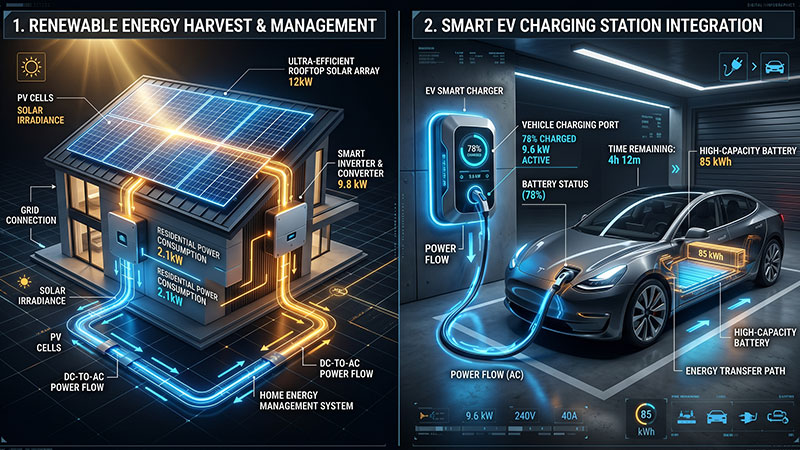
Operating a rooftop solar array and driving an electric car as separate household components delivers solid, individual financial advantages. However, the moment you systematically link these two infrastructures via a dedicated intelligent smart charger, you transition from simple energy conservation into a highly optimized, automated cash retention loop in 2026.
This unified setup represents the absolute pinnacle of residential engineering economics, turning your property into an independent power plant and a private zero-cost fueling station.
The Problem with Dumb Chargers: The Peak Tariff Trap
Many electric vehicle owners rely on standard, non-connected Level 2 chargers—frequently referred to as "dumb" chargers. These units operate on a basic on/off framework; when plugged in, they pull massive electrical currents immediately, with zero awareness of where that power is being sourced.
If you plug your car in during the late afternoon or early evening when your solar panels have finished production, your dumb charger is forced to draw raw power entirely from the utility grid. Even worse, this often coincides with high-tariff periods under Time-of-Use (TOU) utility models, heavily spiking your monthly operating expenses. Homeowners can easily calculate how these dynamic tariff models impact their baseline expenses by utilizing a localized Solar Calculator in Gilbert.
Enter Smart Charger Integration: Real-Time Solar Load Diversion
An intelligent EV smart charger serves as the digital brain of your home's microgrid. By communicating directly with your solar inverter, a smart charger monitors the exact real-time surplus generation leaving your roof.
Instead of allowing your excess solar generation to leak back into the utility grid for low, baseline wholesale export credits, the smart charger intercepts that power and routes it straight into your vehicle's battery. This automated load matching creates exceptional financial advantages:
- True Solar Matching Automation: The system dynamically adjusts its charging speed based on current cloud coverage and household appliance usage. If your solar panels spike to 6 kW of production and your home is only drawing 2 kW, the charger automatically opens up a 4 kW stream straight to your car.
- Preserving Local Energy Value: Powering your vehicle with self-generated electricity preserves its maximum retail replacement value (saving you from buying grid power at full retail rates), which is mathematically vastly superior to standard grid export payback programs.
Strategic Cost Offsets: The Storage and Night Charging Blueprint
For homeowners whose vehicles are away from the property during peak daytime generation hours, combining solar with smart charging unlocks advanced overnight optimization tactics in 2026:
- Battery Bank Buffering: Daytime solar surplus is packed safely into a stationary home battery backup array. When you return home at night, the smart charger smoothly draws from this clean storage reserve rather than tapping high-rate grid infrastructure.
- Off-Peak Grid Intercept: If your vehicle requires more energy than your daily solar yield provides, the smart charger schedules additional charging windows to run exclusively during cheap, midnight off-peak utility hours, keeping your absolute average cost per mile incredibly low. Property owners can map out how these component dependencies alter their total setup costs by checking regional benchmarks for Solar Panel Cost in Las Vegas.
Compound Financial Returns on Unified Green Assets
By integrating an EV smart charger with your solar panel investment, you completely restructure your domestic balance sheet. You are no longer just reducing a utility bill; you are actively wiping out your traditional automotive fueling liabilities at zero marginal operational cost. To accelerate this financial transition, you can track stackable incentives and regional funding layers through our up-to-date guide for Solar Grants in Sugar Land.
Over a standard multi-year framework, this automated ecosystem accelerates your comprehensive solar system payback speed, safeguarding your household from future grid energy inflation and securing a massive long-term financial runway.