Commercial Solar vs. Residential Solar: The Engineering Logic of Multi-Vehicle Fleet EV Charging
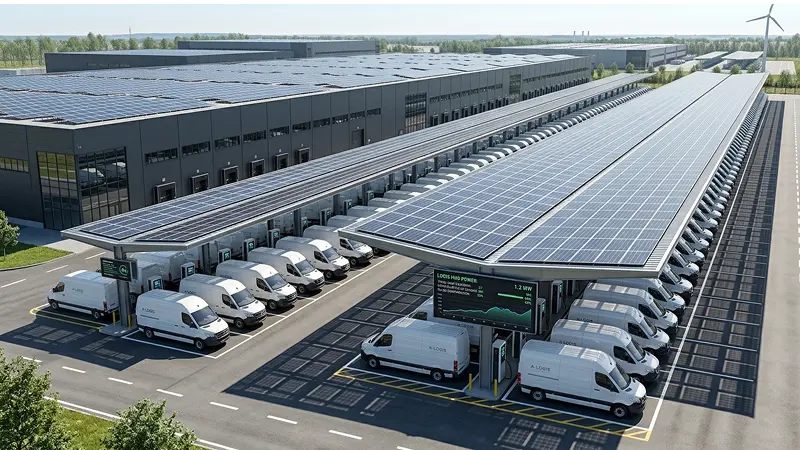
The intersection of photovoltaic generation and electric vehicle infrastructure represents the next massive frontier for full-stack energy platforms. While charging a single electric vehicle at a residential property is a straightforward electrical integration, managing a multi-vehicle commercial fleet introduces an entirely different tier of engineering bottlenecks. When an agency scales infrastructure from a standard driveway to a commercial logistics depot, the baseline calculations for grid capacities, power distribution, and asset management shift dramatically.
Understanding the core technical variances between residential setups and commercial fleet networks allows software engineers and clean-tech developers to build highly resilient local energy systems. Property owners and enterprise logistics managers can evaluate these scaling metrics in real-time by inputting their infrastructure profiles into our active Solar Calculator in London Sutton.
Operational Scale: Single Cars versus Concurrent Grid Demands
The primary differentiator between residential and commercial solar EV integration is the sheer volume of concurrent energy distribution. A residential installation typically designs around a single vehicle pulling power from a standard single-phase electrical panel. In contrast, an enterprise fleet facility manages dozens of delivery vans, corporate vehicles, or transport trucks needing rapid turnarounds simultaneously.
Residential solar arrays usually average between 4 kW and 12 kW in size. This production profile is structurally optimized to offset standard household appliances while trickling surplus power into a standard Level 2 home charger. A home vehicle charging session operates as an isolated event, pulling a predictable 7.4 kW of alternating current over a long overnight window.
Commercial fleet depots operate on a massive industrial scale. A logistics hub managing twenty electric delivery vans requires a dedicated multi-megawatt high-voltage connection. If multiple fleet vehicles plug into high-speed DC fast chargers at the exact same moment, the total instant peak demand can easily surpass the baseline thermal thresholds of standard local grid transformers, risking heavy financial penalties from utility operators.
Phase Configuration: Single-Phase Residential versus Three-Phase Commercial
From a core hardware engineering perspective, the underlying electrical grid infrastructure dictates how solar energy feeds into vehicle battery packs. Residential and commercial frameworks utilize entirely different power delivery topologies.
Residential Single-Phase Distribution
Standard residential properties utilize single-phase power distribution lines. In this setup, a single alternating current waveform delivers power through a standard localized inverter. Because residential vehicle chargers top out at a maximum current threshold of 32 Amps, the solar array merely acts as a parallel generation source that feeds power directly into the home circuit breaker panel. If the home solar panels do not produce enough active wattage, the vehicle seamlessly pulls the remaining required current from the central utility grid without complex automated orchestration.
Commercial Three-Phase Industrial Infrastructure
Commercial facilities utilize three-phase power distribution networks. Three distinct alternating current electrical waveforms are delivered out-of-phase with each other, allowing for massive power delivery across smaller gauge copper wires. Commercial solar inverters are industrial-grade hardware units that must constantly balance generation across all three separate live voltage lines.
When fleet vehicles connect to industrial charging ports, the site software must run complex algorithmic loops to actively monitor phase imbalances. If one electrical phase experiences a significantly higher load than the other two phases, it can cause severe hardware degradation, trip main commercial circuit breakers, and destabilize local building systems.
Mitigating Concurrent Load Peaks via Smart Software Automation
The most difficult challenge in commercial fleet electrification is the management of concurrent load peaks. When a fleet of commercial vans returns to a central depot at the end of a shift, plugging every vehicle in simultaneously creates an immediate spike in electricity demand. If this spike occurs during local peak utility hours, the business faces massive demand charges from the utility provider.
To counteract this financial risk, commercial clean-tech platforms deploy advanced smart load management software. Instead of allowing every vehicle to pull maximum current immediately, the local energy management system utilizes a dynamic queuing algorithm:
1. Prioritization Loops: The software checks the state of charge of each vehicle along with its scheduled departure time.
2. Dynamic Throttle Allocation: Vehicles with low batteries that are scheduled to leave earliest are automatically allocated maximum charging speeds.
3. Solar Matching Sequences: The software continuously tracks the real-time production of the commercial solar array, actively throttling the charging speeds up or down to ensure the facility consumes as much free on-site solar power as possible before pulling expensive grid electricity.
To see how commercial development costs scale based on specific location parameters and regional industrial utility rates, managers can cross-examine active data via our live tracker for Solar Panel Cost in Tecumseh.
Structural Comparison: System Lifecycles and Architectural Specs
When upgrading local clean-tech software models or reviewing infrastructure blueprints, comparing the core physical and financial characteristics helps clarify the massive differences between residential and commercial scales:
| Technical Parameter | Residential System Baseline | Commercial Fleet System Baseline |
|---|---|---|
| Technical ParameterAverage Array Sizing | Residential System Baseline4 kW to 12 kW capacity range | Commercial Fleet System Baseline100 kW to over 2 MW capacity range |
| Technical ParameterGrid Power Phase | Residential System BaselineStandard single-phase connection | Commercial Fleet System BaselineIndustrial three-phase connection |
| Technical ParameterPrimary Charger Types | Residential System BaselineLevel 1 or Level 2 alternating current | Commercial Fleet System BaselineLevel 2 alternating current and high speed DC fast chargers |
| Technical ParameterPeak Load Risks | Residential System BaselineMinor residential panel overloading | Commercial Fleet System BaselineSevere grid transformer overload and heavy demand charges |
| Technical ParameterSoftware Automation | Residential System BaselineBasic scheduled charging windows | Commercial Fleet System BaselineAdvanced dynamic load shaping and real-time phase balancing |
| Technical ParameterHardware Lifecycle | Residential System Baseline25-year static panel degradation tracking | Commercial Fleet System Baseline25-year panel lifecycle paired with accelerated battery cyclic wear |
Designing Microgrids for Enterprise Fleet Resiliency
For enterprise organizations that cannot afford operational downtime, basic grid-connected solar is often insufficient. If the local utility grid experiences a blackout, standard grid-tied solar inverters automatically shut down for safety reasons, leaving an entire fleet stranded without power.
To build true operational resiliency, commercial fleet operators increasingly deploy localized microgrids. A commercial microgrid combines massive solar carports, industrial-grade battery energy storage systems, and specialized island-capable inverters. When the utility grid fails, the microgrid software instantly disconnects the facility from the wider utility network, establishing an isolated local power grid. The commercial solar array continues to generate power, filling the onsite storage batteries and keeping the fleet vehicle chargers fully operational.
Enterprises can explore localized financial aid programs, regional tax credits, and environmental structural subsidies to offset these advanced microgrid investments by analyzing our up-to-date index for Solar Grants in München Pasing.
By integrating intelligent software layers with heavy-duty three-phase hardware, commercial fleet solar solutions move far beyond simple green energy initiatives. They serve as highly optimized, self-sustaining power stations capable of running industrial transportation logistics with maximum efficiency and minimal overhead costs.