Photovoltaik Förderung 2026: Germany Solar Incentives & ROI
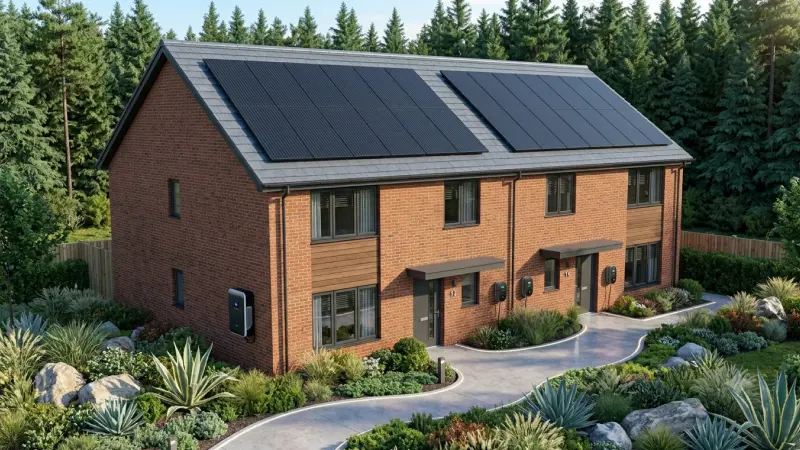
The European Union’s clean energy transition is heavily anchored by the aggressive regulatory updates taking place within the continent's largest economic powerhouse. For property owners operating within the German energy grid, retrofitting residential or commercial assets with advanced photovoltaic (PV) setups has shifted from a forward-looking hedge into an immediate financial imperative. With regional utility retail pricing heavily influenced by structural grid fees and shifting generation metrics, understanding localized financial incentives is critical to locking in short payback windows.
Evaluating the architecture of photovoltaik förderung 2026 mechanisms requires a granular look into tax code exemptions, federal loan programs, and the foundational feed-in frameworks monitored directly by the Federal Network Agency (*Bundesnetzagentur*).
Whether you are designing a compact residential rooftop installation or auditing decentralized solar generation assets for a commercial logistics facility, this comprehensive study maps out how to stack Germany’s current energy parameters to compress your capital recovery timeline. Homeowners can actively run their spatial yields and baseline generation metrics through our localized Solar Calculator in Berlin Mitte.
The Core Fiscal Engines: 0% MwSt & EStG Tax Relief
The single largest structural boost for the German solar market is the total elimination of fiscal barriers for residential and public-interest energy installations. Passed under targeted amendments to the German Value Added Tax Act (§ 12 Abs. 3 UStG), the statutory sales tax (*Mehrwertsteuer - MwSt*) on the acquisition and structural deployment of complete PV systems is set at exactly 0%.
This comprehensive 0% VAT solar germany tax mechanism eliminates upfront financial drag by covering:
- Core solar modules, high-efficiency smart inverters, and mounting rack mechanics.
- Integrated battery storage setups directly linked to a concurrent PV generation array.
- On-site energy management hardware, cabling, and certified technician installation labor.
Complementing this sales tax protection is an equally powerful income tax loophole governed by § 3 Nr. 72 of the German Income Tax Act (EStG). Under this rule, owners of small-to-medium-scale systems (up to 30 kWp on single-family residential properties and up to 15 kWp per commercial or residential unit in multi-family structures) are completely exempt from income tax on generated solar earnings.
This eliminates the legacy administrative burden of complex profit-and-loss filings (*Einnahmenüberschussrechnung - EÜR*) and corporate business registrations, turning your rooftop generation into a completely tax-free cash compounder. Property owners can easily evaluate current pricing baselines and asset component lines by reviewing our regional tracker for Solar Panel Cost in Zwickau Centro.
The EEG Feed-in Tariff Framework: Shifting Dynamics
The foundational baseline of Germany’s renewable deployment is the Renewable Energy Sources Act (Erneuerbare-Energien-Gesetz - EEG). The EEG guarantees connection rights, grid priority dispatch, and a fixed remuneration tariff paid out over a 20-year contract duration plus the remainder of the commissioning year.
When configuring your system architecture under the active framework, you must select one of two primary structural monetization logic choices:
1. Partial Feed-in (*Teileinspeisung*)
The system is explicitly engineered to maximize behind-the-meter self-consumption. Solar power directly fulfills the real-time operational loads of the building first, completely avoiding high retail import utility tariffs (averaging ~30¢ to 35¢ per kWh). For system connections initialized prior to July 31, 2026, any momentary excess surplus energy produced during peak midday curves flows out to the local grid line and receives a fixed remuneration of 7.78¢ per kWh (for systems up to 10 kWp).
2. Full Feed-in (*Volleinspeisung*)
The installation is decoupled from internal asset demands, and 100% of generated kilowatt-hours are directly ingested by the local distribution network operator (*Netzbetreiber*). Because this layout doesn't offset retail power bills, the state provides an enhanced baseline remuneration rate of 12.34¢ per kWh (for systems up to 10 kWp) to balance development costs.
The August 1, 2026 Degression & Negative Pricing Limitations
It is critical to account for active legislative compression parameters within your immediate financial timelines. Under statutory EEG rules, Germany enforces a semi-annual 1% automatic tariff degression. The current rates (7.78¢ and 12.34¢) apply strictly to setups commissioned by July 31, 2026; installations finalized on or after August 1, 2026, will automatically lock in a 1% lower baseline rate, raising your payback horizon if projects are delayed.
Furthermore, active 2026 framework protocols enforce a strict grid threshold policy during overproduction cycles: if wholesale market energy prices plunge into negative values for 2 consecutive hours or more, grid operators are legally mandated to temporarily suspend your feed-in remuneration for that specific generation block.
Critical Regulatory Target Window
Urgent Structural Outlook: Legally drafted structural reforms targeting the EEG framework indicate that new grid connections initialized from January 1, 2027, will see a permanent removal of guaranteed per-kilowatt-hour fixed rates for installations under 25 kWp. Future operators will be forced into decentralized market value premium models (*Direktvermarktung*) or spot-market tracking with a compressed 1-hour negative pricing trigger threshold.
Commissioning your system within the active 2026 operational window locks in your specific eeg feed in tariff germany baseline rate for two solid decades, entirely insulating your infrastructure from coming market volatility.
Commercial & Industrial (C&I) Stack: KfW 270 and Beyond
For corporate enterprises navigating high industrial load curves or planning massive scale installations, Germany's germany solar incentives stack provides advanced asset funding and rapid capital depreciation paths.
KfW Program 270 (Renewable Energies Standard)
The state-backed KfW development bank (*Kreditanstalt für Wiederaufbau*) offers specialized low-interest loans designed specifically for corporate photovoltaic arrays and integrated energy storage banks. Key parameters under the Program 270 framework include:
- Up to 100% upfront financing of total eligible capital expenditure (CAPEX) costs.
- Extended amortization repayment terms spanning up to 20 years, matching the underlying EEG lifecycle.
- Flexible initial operational phases featuring up to 3 repayment-free initial years to preserve immediate corporate cash liquidity.
To complement commercial financing, corporations can leverage § 7g EStG to execute an accelerated depreciation allowance (*Investitionsabzugsbetrag*), enabling them to write off up to 20% of the entire system capital valuation directly within year one of installation. Business leaders can track stackable European grants and regional funding pathways via our up-to-date tracking map for Solar Grants in Völklingen Centro.
Sizing and Financial Modelling: Compressing Payback Horizons
To optimize your solar panel payback period germany metrics, system engineering must carefully balance self-consumption depth against battery storage capacity. Because self-consumed power saves roughly four times the cash value of grid-exported power, un-optimized arrays can leak structural return on investment.
Let us evaluate the audited capital metrics of a typical 10 kWp residential premium installation utilizing 0% VAT protection paired with an integrated 5 kWh smart battery bank:
| Financial Metric Component | Residential Asset Value |
|---|---|
| Financial Metric ComponentBaseline Annual Electricity Usage | Residential Asset Value4,500 kWh |
| Financial Metric ComponentEngineered 10 kWp Array + Storage Cost (0% VAT) | Residential Asset Value€16,500 |
| Financial Metric ComponentEstimated Annual Self-Consumption Rate (With Battery) | Residential Asset Value~70% |
| Financial Metric ComponentAvoided Retail Grid Spending (~30¢/kWh Baseline) | Residential Asset Value€945 / Year |
| Financial Metric ComponentSurplus EEG Remuneration Revenue (7.78¢/kWh Export) | Residential Asset Value€494 / Year |
| Financial Metric ComponentCombined Annual Yield Benefit | Residential Asset Value€1,439 / Year |
| Financial Metric ComponentCalculated Payback Horizon Timeline | Residential Asset ValueUnder 11.5 Years |
By deploying high-density solar components within the 2026 window, the property transitions to near total localized energy independence, targeting an absolute sub-12-year payback horizon while retaining more than 8 solid years of pure, tax-free guaranteed contract revenue thereafter.
Strategic Interconnection Process for German Installations
Activating your fiscal exemptions and locking in your fixed remuneration requires a highly synchronized administrative sequence alongside certified engineering partners:
1. Submit a formal Network Inquiry (*Netzanfrage*): Your installer must submit the technical setup parameters to the regional *Netzbetreiber* before any mounting brackets or rails are mounted to verify transformer line capacity.
2. Execute the Physical Installation and Commisioning: Complete the hardware mounting, certified AC-side electrical inverter connection, and commissioning protocol signature.
3. Register with the Marktstammdatenregister (MaStR): You must legally register the complete system specifications in the central database of the Federal Network Agency within 30 days of grid activation. Failure to input details into the MaStR will permanently halt your monthly EEG feed-in tariff payouts.
4. Notify the Local Tax Office (*Finanzamt*): Submit a simplified, formal declaration citing your compliance under § 3 Nr. 72 EStG parameters to automatically secure your lifelong tax-exempt solar income tracking.