UK Solar Grants 2026: ECO4 & LA Flex Scheme Guide
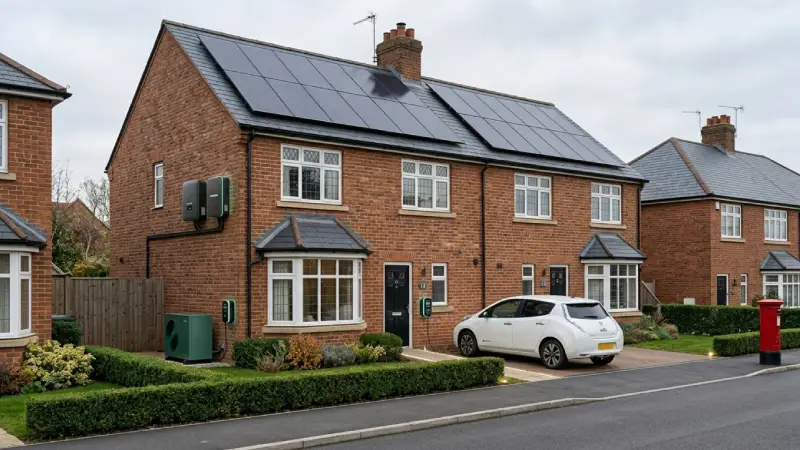
The UK residential energy landscape is experiencing a massive regulatory push toward total decarbonisation. With domestic electricity tariffs remaining susceptible to wholesale market volatility, retrofitting residential properties with photovoltaic (PV) infrastructure has transitioned from an environmental luxury to an economic necessity.
For households operating within low-income thresholds or living in energy-inefficient properties, the capital expenditure of a high-tier solar array remains the primary barrier.
To bridge this financial gap, the Department for Energy Security and Net Zero (DESNZ), regulated by Ofgem, operates the fourth iteration of the Energy Company Obligation: the ECO4 Scheme. Armed with a massive £4 billion total obligation budget, this government-backed initiative forces large energy suppliers to fully fund deep, whole-house energy efficiency upgrades.
Crucially, following the formal regulatory extension that locked the final operational runway toward the strict December 31, 2026 closing deadline, understanding the dual-track validation paths—Standard Benefits and Local Authority Flexibility (LA Flex) is vital to unlocking a completely free or heavily subsidized solar system. Eligible applicants can instantly benchmark their location-specific advantages and funding paths by reviewing our updated Solar Grants in South Shields Central.
The Whole-House Philosophy: How ECO4 Handles Solar PV
Unlike historic, localized grant programs that functioned as isolated technology vouchers, ECO4 strictly enforces a systemic, "whole-house" retrofit approach. This means that independent, standalone solar applications are rarely approved. Instead, Ofgem's framework dictates that a property must undergo an all-inclusive transformation to compress its carbon footprint and permanently lower utility outlays.
When an approved PAS 2035 certified coordinator conducts an official property assessment, they compile an interconnected package of energy-saving measures. A typical fully funded ECO4 deployment package includes:
- High-performance cavity wall, loft, or internal solid wall insulation.
- High-efficiency low-carbon heating technologies, such as Air Source Heat Pumps (ASHPs).
- Advanced Solar Photovoltaic (PV) arrays paired with optimized battery storage links to minimize grid dependency.
By combining generation (Solar Panels) with structural preservation (Insulation) and optimized consumption (Heat Pumps), the program ensures that the property’s Energy Performance Certificate (EPC) rises dramatically, moving the household out of structural fuel poverty.
The Two Primary Eligibility Tracks for 2026
To capture the full value of the ECO4 obligation before funding quotas lock out new entries, applicants must successfully qualify through one of two distinct legal paths.
Route 1: The Standard Help to Heat Group (HTHG)
The traditional path into ECO4 relies heavily on means-tested, income-related state benefits. If an owner-occupier or private tenant (with formal written landlord consent) actively receives any of the following Department for Work and Pensions (DWP) distributions, they bypass initial screening loops:
1. Universal Credit & Housing Benefit.
2. Pension Credit (Both Guarantee Credit and Savings Credit allocations).
3. Income Support or Income-related Employment and Support Allowance (ESA) / Jobseeker’s Allowance (JSA).
4. Child Tax Credit and Working Tax Credit.
5. Child Benefit (Subject to strict gross household income caps mapped against the specific number of adult and child occupants).
Route 2: Local Authority Flexibility (LA Flex)
The true breakthrough for regional pSEO optimization is the Local Authority Flexible Eligibility (LA Flex) mechanism. Historically, thousands of households faced severe fuel poverty but fell just outside the rigid state-benefit net. Under LA Flex, local councils are granted statutory powers to "flex" the standard criteria, allocating up to 50% of the total regional ECO4 funding pool to target vulnerable demographic segments.
Under current guidelines, local authorities publish a formal "Statement of Intent" detailing specific regional target paths. The four main operational criteria categories include:
- Gross Income Thresholds: Total combined household income falls strictly below £31,000 per annum, regardless of benefit status.
- Proxy-Based Vulnerability: Properties displaying high heating expenditures relative to income, paired with geographical deprivation metrics (Index of Multiple Deprivation data clusters).
- Health Declarations: A resident suffers from a verified, long-term chronic medical condition directly exacerbated by cold living conditions (e.g., severe cardiovascular diseases, chronic obstructive pulmonary disease (COPD), acute asthma, or restricted physical mobility), validated via a standard GP or NHS trust referral loop.
- In-Fill Mechanisms: Allowing adjacent properties on the same street or within the same multi-occupant structural block to claim matching retrofits (such as solid wall insulation or shared infrastructure) to maintain structural engineering continuity.
Technical Mapping: EPC Thresholds and Priority Rankings
Even if an applicant meets the personal financial or health conditions, the physical property must possess a baseline efficiency deficit to trigger structural approval. ECO4 prioritizes the least energy-efficient homes across England, Scotland, and Wales.
Using our advanced system modeling, the table below highlights how your current Energy Performance Certificate rating directly controls your funding priority and deployment velocity:
| Current EPC Band | Structural Eligibility Status | System Funding Priority Level | Mandated Target Outcome |
|---|---|---|---|
| Current EPC BandBand E, F, or G | Structural Eligibility StatusFully Eligible | System Funding Priority Level🟢 Highest Priority Channel | Mandated Target OutcomeMust be upgraded to minimum Band C or D |
| Current EPC BandBand D | Structural Eligibility StatusConditionally Eligible | System Funding Priority Level🟡 Medium Priority (15% Cap) | Mandated Target OutcomeSubject to tight Ofgem volume delivery limits |
| Current EPC BandBand A, B, or C | Structural Eligibility StatusGenerally Ineligible | System Funding Priority Level🔴 Low Priority Exclusions | Mandated Target OutcomeAlready meets baseline statutory efficiency |
Navigating the Band D Delivery Cap
It is critical to note that Ofgem applies a strict 15% structural delivery cap to properties registered as EPC Band D. While these homes are technically eligible, energy suppliers aggressively prioritize Band E, F, and G properties to satisfy their core statutory penalty targets first. If your property is rated as an outdated Band D, initiating an early application is paramount before seasonal allocations fill up. UK residents can evaluate their primary hardware requirements and local equipment estimations by cross-referencing the baseline Solar Panel Cost in Rhyl Central.
Post-Installation Monetization: The Smart Export Guarantee (SEG)
Securing a free solar system through an ECO4 grant delivers an immediate reduction in your daily baseline grid consumption. However, the financial upside does not halt at self-consumption. Once your solar array is commissioned by an installer certified under the Microgeneration Certification Scheme (MCS), you legally qualify for the Smart Export Guarantee (SG).
The SEG is a separate regulatory framework that mandates all UK electricity suppliers with over 150,000 customers to pay homeowners for every kilowatt-hour (kWh) of clean, surplus electricity they export back into the National Grid. Because the asset was funded via ECO4, your capital acquisition cost is effectively zero, turning your SEG export checks into pure financial return.
Comparative Look at Leading UK Export Tariffs
To optimize your ongoing long-term monetization timeline, consider the current active market export structures:
- Octopus Energy (Outgoing Octopus): Offers highly competitive fixed export rates hovering around 15p per kWh, alongside dynamic, time-of-use tariffs for advanced battery users.
- Tesla Energy Plan: Delivers premium rates up to 24p per kWh, though restricted to integrated Powerwall hardware structures.
- British Gas (Export & Earn): Offers tiered options ranging from 6p to 15p per kWh depending on whether you also source your import power from their network.
- E.ON Next / EDF Energy: Provide standard baseline export structures averaging between 3p and 10p per kWh.
For a standard 4 kWp family home array deployed under an ECO4 package that exports an estimated 1,500 kWh of surplus solar power annually, selecting a top-tier SEG tariff injects an extra £100 to £360 of direct income back into the household balance sheet every single year. Property owners can actively calculate how these localized export yields and generational savings offset their annual bills via a dedicated Solar Calculator in Glasgow City Centre.
Step-by-Step Roadmap to Secure Your ECO4 Allocation
Because funding allocations operate on a first-come, first-served basis, processing delays can jeopardize your installation windows as installer schedules saturate ahead of the December 2026 cut-off. Execute this operational roadmap to lock in your system:
Phase 1: Verification and Document Assembly
Do not contact an installer without your baseline records organized. Retrieve your official EPC registration from the central GOV.UK register. If your certificate has expired or is older than 10 years, prepare for a fresh assessment.
If applying via Route 1, secure a digital copy of your official DWP award letter issued within the last 3 months. If applying via Route 2 (LA Flex), compile your last three months of bank statements or your local authority tax statement to prove your combined gross income falls below the £31,000 baseline threshold. Save all files as standardized, high-resolution PDFs.
Phase 2: Technical Survey and Scheme Design
Submit your validated data package through an accredited PAS 2035 retrofitting company or your local council’s approved contractor portal. The assigned provider will deploy a certified energy surveyor to your property.
The surveyor will complete an exhaustive eco-audit, assessing your wall thickness, loft insulation depths, and roof space orientation. They will generate an automated structural improvement proposal detailing the exact mix of insulation, heat pumps, and solar PV modules required.
Phase 3: Final Sign-Off and Zero-Cost Execution
Once the design passes the obligated energy supplier's internal funding approval loop, a certified installation team will execute the deployment. All components must carry matching PAS 2035 or MCS stamps.
Upon completion, the installer handles the extensive Ofgem verification compliance paperwork, registers your new smart export meter details, and issues your upgraded, legally compliant EPC certificate. The entire financial charge is billed directly to the energy supplier, requiring absolute zero upfront capital outlays from you.